
By Remy Swaab, CEO of Banking.Systems
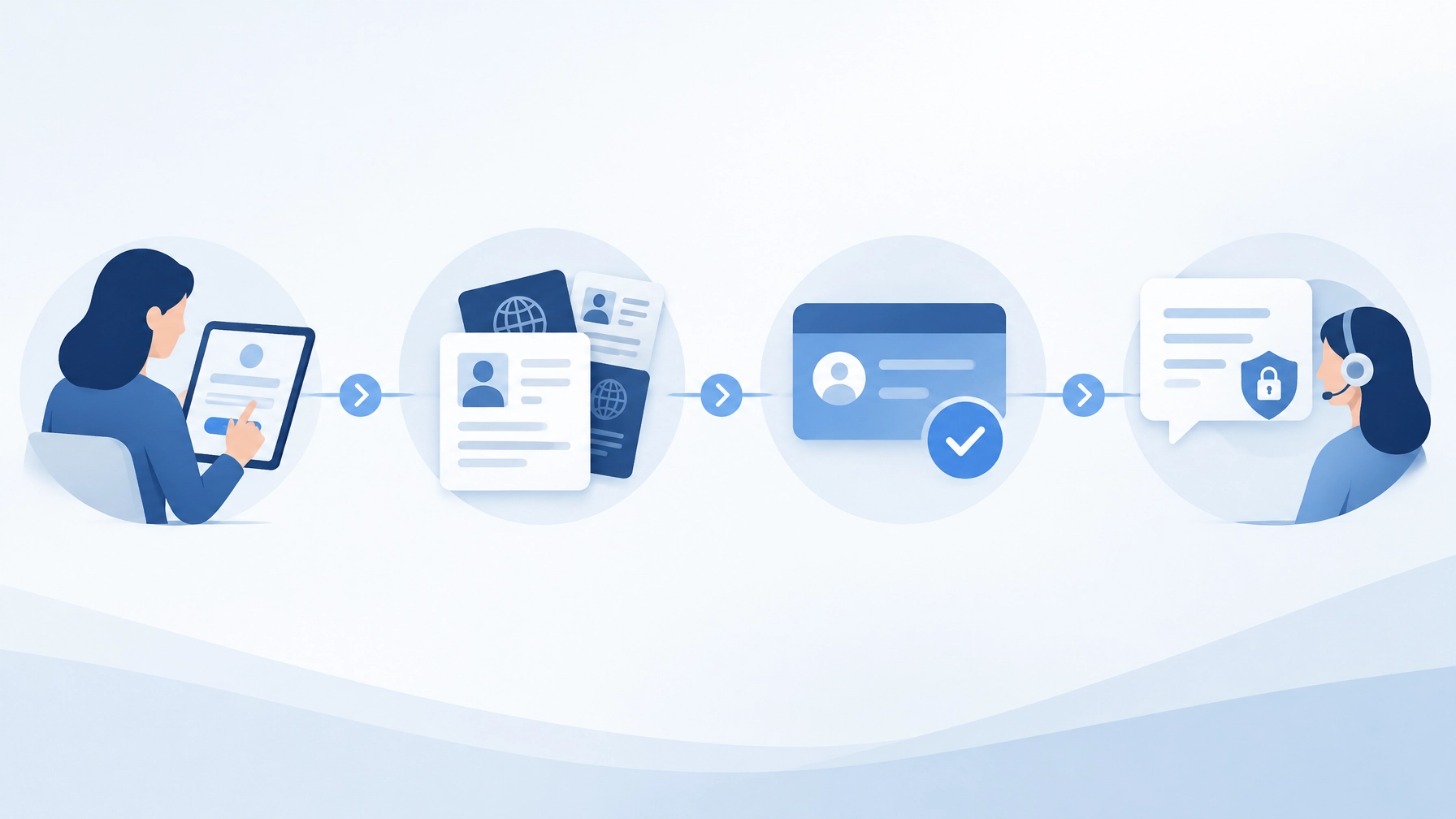
A digital banking journey does not end when an application is submitted, or even when an account is opened. Customers experience the institution through a sequence of connected steps: applying, providing information, receiving a decision, accessing an account, getting help and completing everyday tasks.
When those steps feel disconnected, customers may have to repeat information, search for updates or switch channels without knowing what happens next. For the institution, gaps between customer-facing services and internal processes can create avoidable follow-up work and unclear ownership.
A well-designed journey connects these touchpoints while making the next step clear to both the customer and the staff involved. That requires more than a polished application form. It calls for coordinated workflows, considered channel design, clear handoffs and useful ways to measure where friction occurs.
Map the journey beyond the application
Start by describing the journey in the customer’s terms, from first application to ongoing service. A practical map might include:
- Application started
- Information and documents submitted
- Application reviewed or referred for staff attention
- Decision communicated
- Account activated and access provided
- Customer completes an initial task
- Ongoing requests and service needs handled
For each step, identify what the customer needs to know, what information the institution needs, who is responsible for the next action, and what happens when something is missing or delayed. Include exceptions as well as the expected path. An application that needs clarification, for instance, should have a defined route back to the customer rather than disappearing into an unowned queue.
This map provides a basis for discussing how an online banking platform and its supporting operations may fit the intended service. It also helps distinguish customer experience requirements from the operational processes needed to deliver them.
Make web and mobile steps feel connected
Customers may begin an application on one device and return on another, or use mobile banking for routine tasks while contacting staff for a more complex request. The experience should make those changes feel like part of one relationship, not a fresh start.
Consistency does not mean every screen must look identical. It means that terminology, status information, instructions and next steps remain understandable across channels. If an application cannot be completed in one session, the institution should decide whether progress can be resumed and how the customer will find it again. If a task moves to assisted service, staff should be able to understand its status without asking the customer to start over.
NexorONE® provides responsive online interfaces for customer and operational access. The specific customer journeys, presentation and configuration depend on project requirements. A platform can support channel design, but the institution still needs to define the content, process rules and service responsibilities that make the experience coherent.

Treat identity and document collection as a workflow
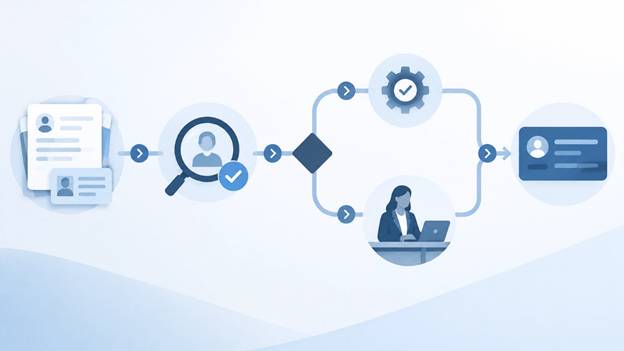
Identity verification and document collection are not just form fields. They involve explaining what is needed, capturing information, checking whether submissions are complete, resolving issues and recording what happens next.
A customer onboarding workflow should make these steps as clear as possible. For each document or piece of information, the institution should consider:
- Why it is being requested and how the customer should provide it.
- What makes a submission complete or usable.
- How the customer will learn that further information is needed.
- Which staff or system process reviews it, and how the review is recorded.
- What the customer sees while a decision or review is pending.
NexorONE® supports document handling and review workflows, including operational document uploads. The identity checks, decision rules and any connections to external verification services need to be evaluated and scoped for the institution’s requirements. A platform capability can support a process; it does not by itself determine the institution’s verification policy or guarantee an application outcome.
Make decisions and staff handoffs visible
Not every application follows the same path. Some may continue through a defined process, while others need additional review or clarification. The customer experience benefits when these routes are designed deliberately, with clear ownership at each handoff.
For every decision point, establish what information is considered, what action follows, who is responsible and how the application’s status is communicated. When a case moves to a staff member, that handoff should include enough context for the next person to act without recreating work. If a customer must provide more information, the request should be specific and the response should return to the appropriate workflow.
Internal teams also need a way to see what is waiting, what has been completed and where an exception needs attention. NexorONE® includes customer and administrator interfaces, operational workflows and audit capabilities that can support this kind of administration, depending on the selected scope and configuration. Process design, staffing and service standards remain the institution’s responsibility.
Connect activation to clear customer communications
An account opening is not necessarily the same as an activated relationship. Customers need to understand when an account is ready, how to access it and what they can do next. Those details should be planned as part of the journey, not left until after a technical setup is complete.
Institutions can define messages for key stages such as receiving an application, requesting additional information, communicating a decision, confirming account availability and explaining how to get help. Messages should be timely, accurate and consistent with the actual status of the application or account. A welcome message that implies a service is ready before it is available can create confusion rather than confidence.
Secure messaging and operational notifications can support customer communication where included and configured. The institution must determine message content, triggers, delivery methods and service ownership. The platform can provide tools; it cannot guarantee that a customer will read or act on a message.
Decide what belongs in self-service, and what needs assistance
Self-service can be useful for straightforward, repeatable needs: checking account information, reviewing transaction history, accessing available documents or submitting a routine request. It may reduce unnecessary handoffs when the task is clear and the customer can complete it confidently.
Assisted service matters when a request is complex, unusual or difficult to resolve without context. A customer who cannot access an account, disputes an unexpected outcome or needs help with an incomplete application should have a clear route to a person or team equipped to help.
The right balance depends on the institution’s service model and the tasks it offers. Each self-service option should have a defined fallback. Each assisted process should give staff enough information to understand what the customer already tried.
Give ongoing requests an owner and an audit trail
The customer journey continues after account activation. Requests such as changing access, updating information or asking about a card, where those services are offered, need a clear path from submission to resolution.
A useful internal workflow defines:
- How the request is received and categorized.
- Which role can review, approve or complete it.
- What information or authorization is required.
- How progress and completion are recorded.
- How the customer is informed if the request is delayed or cannot proceed.
These controls support operational clarity and help staff understand the history of an interaction. NexorONE® includes administrative functions, request handling and audit capabilities; the exact workflow and permissions should be confirmed against the selected configuration and institutional procedures. Examples such as card requests depend on the institution’s services and project scope.
Separate staff permissions by responsibility
A consistent customer experience also depends on reliable internal access. Staff should be able to carry out their responsibilities without unnecessary access to unrelated functions or information.
Map roles before configuring permissions. Consider which users can view customer information, handle documents, manage accounts, process requests, approve actions or administer settings. Where a process requires review or approval, define whether responsibilities should be separated and how that separation will be maintained in day-to-day operations.
Role-based access and audit records can support these controls, but their effectiveness depends on careful configuration, governance and ongoing review. The institution should also plan how permissions change when staff responsibilities change.
Plan for language across interfaces and documents
For cross-border institutions or customers with different language needs, localization should cover more than navigation labels. Application instructions, status messages, customer communications, help content and documents should be considered together.
NexorONE® supports multi-language interface capabilities. The languages required, the scope of translated content and the handling of customer documents need to be established for the project. Translation quality, jurisdiction-specific wording and review processes should be managed by the institution. A multilingual interface alone does not ensure that every part of a journey is available in every language.
Measure friction without assuming the answer
Journey measurement helps teams identify where processes may need attention. Useful measures can include:
- Applications started, completed and abandoned at each stage.
- Time from application submission to decision and activation.
- Time spent waiting for customer information or staff review.
- Handling time for common service requests.
- Requests reopened, returned for missing information or escalated.
- Customer feedback at relevant points in the journey.
Define each measure consistently before comparing results. For example, clarify what counts as “activated,” when a handling-time clock begins, and how incomplete or withdrawn applications are treated. Segmenting results by channel, application type or workflow path may help teams understand where effort is concentrated.
These measures do not automatically reveal the cause of a problem. A high number of incomplete submissions, for example, could reflect unclear instructions, a difficult upload process or a policy requirement. Teams should review the process and customer feedback before changing rules or technology.

Build continuity through deliberate design
A consistent digital banking journey links customer-facing steps with the decisions, roles and processes behind them. It sets expectations during onboarding, provides clear ways to complete routine tasks, and preserves context when staff need to step in.
NexorONE® is a configurable online and core banking platform with customer and administrator interfaces, document handling, messaging, operational workflows and audit capabilities. How those capabilities support a particular journey depends on the institution’s requirements, configuration, integrations and project scope. Explore NexorONE®’s product capabilities or review Banking.Systems’ approach to banking operations technology.
Banking.Systems has provided and supported banking technology since 2005, serving more than 500 financial institutions. Its role includes supporting clients through evaluation, implementation coordination, customization, integrations and ongoing technical support according to each solution’s scope and agreement.
Leave a Reply